
Your Braces Guide
Simple explanations for the tools and techniques used during your treatment, so you always feel informed, confident, and comfortable every step of the way. During your orthodontic journey, you may hear terms like elastics, separators, or bite jumpers. This page is here to break everything down in a way that’s easy to understand, no confusion, no overwhelm.
Bands
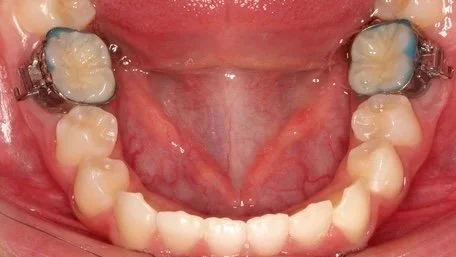
Orthodontic bands are custom-shaped metal rings that fit securely around the teeth. They are cemented in place and used to provide strong support for braces and other orthodontic appliances such as expanders, space maintainers, and bite jumpers. Bands are most commonly placed on the molars (the large back teeth) because they act as anchors during treatment and are able to withstand stronger chewing forces. In certain cases, bands are preferred over bonded brackets when extra strength or stability is needed, such as when a tooth has a filling or crown that does not bond well to traditional brackets, or if a bracket repeatedly breaks during treatment. Because molars support many orthodontic forces, bands may also be used to hold specialized appliances.
How Bands are placed
Before a band can be placed comfortably, small spaces are created between the teeth using separators (spacers). These tiny elastic rings are placed about a week before your appointment to gently create room for the band to fit properly. Once the space is created, the band is fitted and cemented securely onto the tooth.
Important care tips
If a band becomes loose, comes off, or feels uncomfortable, please contact our office so we can help.
During treatment, it’s also important to avoid very sticky or hard foods that could affect your appliances. Popcorn is especially discouraged, as kernels can become trapped around the band and irritate the gums.
Braces Colors
One of the best parts of braces at Johnsonlink Orthodontics is choosing your colors! Each visit is a chance to switch things up, mix colors, and have fun personalizing your smile. Most patients love shades like pink, blue, and silver, but there are endless combinations to choose from, so you can make your braces completely your own.
What to Expect
Not sure what to pick?
Go with your favorite color
Choose something you love, you can change it at every appointment!Try multiple colors
Mix and match for a bold or rainbow look.Color of the month
Join in on our featured color each month for a fun way to switch things up, and you may even be entered into a little surprise drawing!Holidays & seasons
Celebrate the season with themed colors for holidays like Valentine’s Day, Halloween, or Christmas.School spirit & sports teams
Show off your pride by matching your school or favorite team colors.Special occasions
Weddings, dances, graduations, your braces can match the moment!
Make it your own
The great thing about braces is that your colors change with you. Every appointment is a new chance to express your personality and have a little fun with your smile journey.
Don’t be afraid to get creative, there’s no wrong combination!

Bite Jumpers (Forsus Springs)
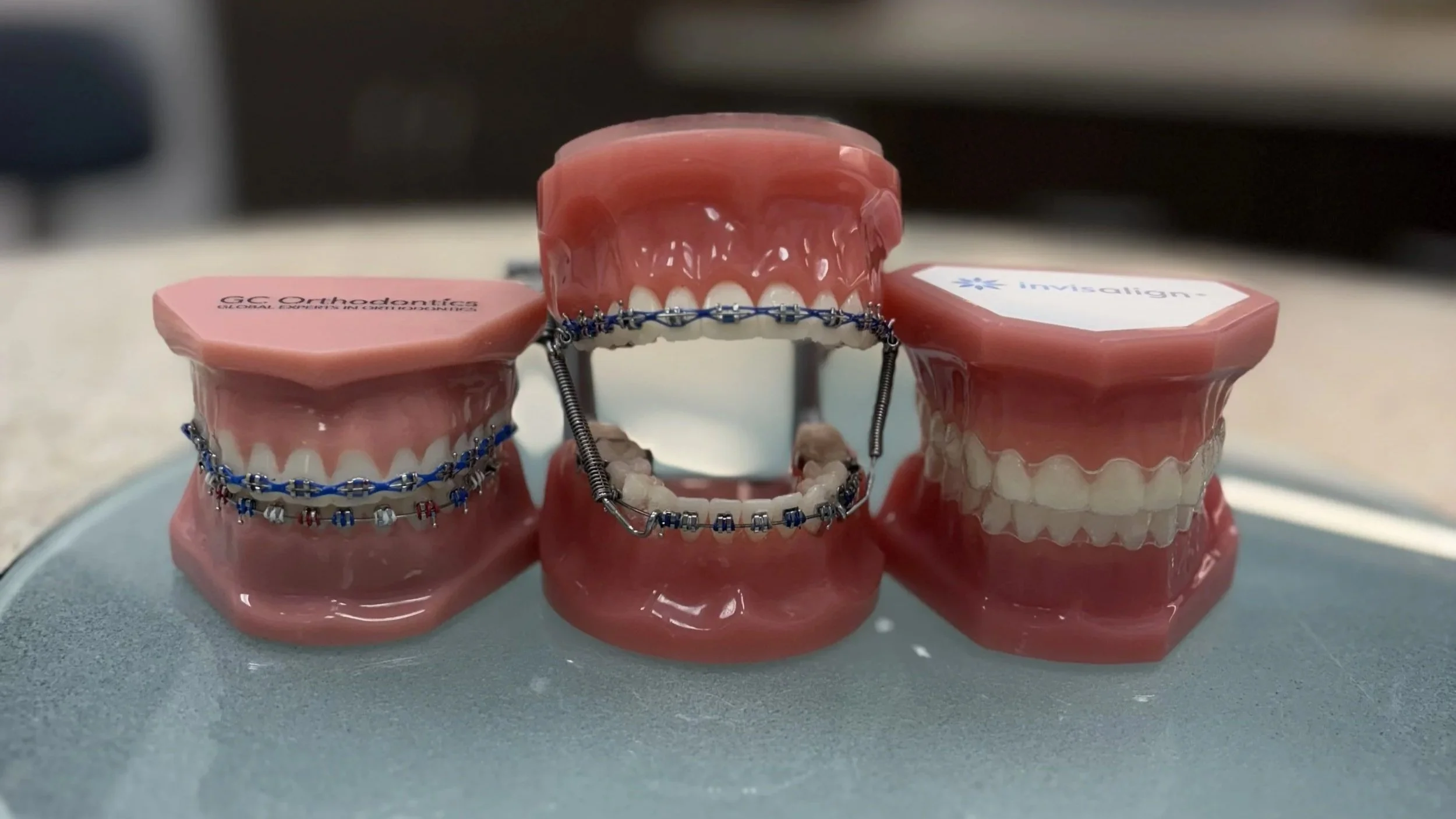
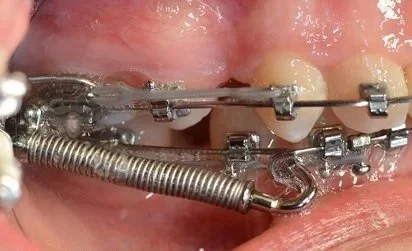
Bite jumpers, also known as Forsus springs, are orthodontic appliances used to help correct an overbite (Class II bite), where the upper teeth sit too far forward compared to the lower teeth. This can sometimes create a “protruding” or “buck tooth” appearance. These appliances work by gently guiding the bite into better alignment over time. Think of bite jumpers as tiny springs that help your upper and lower jaws learn to fit together better.
How Bite Jumpers work
Bite jumpers connect your upper and lower braces with small spring-loaded arms that gently encourage your lower jaw forward while helping your bite improve over time. Because they work continuously, they don't rely on remembering to wear elastics and are a very effective way to correct certain bite problems.
What to Expect
Bite jumpers are typically placed after your braces have been on for several months. Treatment with bite jumpers usually lasts around 6–9 months, depending on your individual needs.
As your bite improves, it is normal for your teeth to temporarily feel slightly “overcorrected.” This is expected and part of the process that helps achieve a stable final result.
After bite jumpers are removed, some patients may wear elastics (rubber bands) for a short period to help fine-tune the final bite.
Need help adjusting your Bite Jumper?
If your bite jumper comes apart, don’t worry, this can happen occasionally and is usually easy to fix at home. Watch our quick step-by-step video below to see how to guide it back into place.
Important Information
Because bite jumpers are flexible, they may occasionally come apart if the mouth is opened very wide (such as during yawning). If this happens, the pieces can usually be gently guided back into place by opening and closing the mouth.
If you have any difficulty or if something feels off, please contact our office so we can help.
Elastics (Rubber Bands)
Elastics, also known as rubber bands, play an important role in helping guide your teeth and bite into proper alignment during orthodontic treatment.
While braces do most of the work in straightening your teeth, elastics are used to correct specific bite relationships that braces alone cannot fully fix. They help your upper and lower teeth work together properly for the best long-term result.
How Elastics work
Elastics gently apply continuous pressure to help move your teeth into the correct position over time. Depending on your treatment plan, they may be used to correct different types of bite concerns. For the best results, it is very important to wear your elastics exactly as directed, consistency is key to keeping your treatment on track and achieving the desired outcome.
What to Expect
At first, elastics may feel a little awkward or unfamiliar to place, but most patients adjust quickly with practice.
Some mild soreness is normal when you first start wearing them or after changes in wear. This is simply a sign that the elastics are doing their job and guiding your teeth into better alignment. Staying consistent helps the discomfort fade more quickly.
Important Information
Elastics are typically made of latex, but latex-free options are available for patients with sensitivities.
If you have any questions or are unsure how to wear them, our team is always here to help.

Need help wearing your elastics?
Wearing your elastics correctly is an important part of your treatment. If you need a quick refresher, we’ve got you covered:
Separators (Spacers)
Separators, also known as spacers, are small elastic rings placed gently between certain teeth to create space where it’s needed. They are most commonly used before placing orthodontic bands, helping ensure a proper and comfortable fit. In some cases, separators may also be used to create space for teeth that are blocked out or need room to come in properly.
What to Expect
Important care tips
You may feel some tightness or slight soreness after separators are placed, this is normal and usually temporary as space is being created.
Avoid sticky, chewy, or gummy foods (such as caramel, gum, or taffy)
Do not floss around the separators, as this can cause them to come out
If a separator falls out or feels uncomfortable, please contact our office for guidance
